blog-post // Aug 6, 2026
How Long Does a Tre Flip Take to Learn: Realistic Expectations
Tre flip runs 6–18 months on Onbolts' learning data, advanced difficulty, built on pop shove-it and kickflip. Here's what decides your timeline.
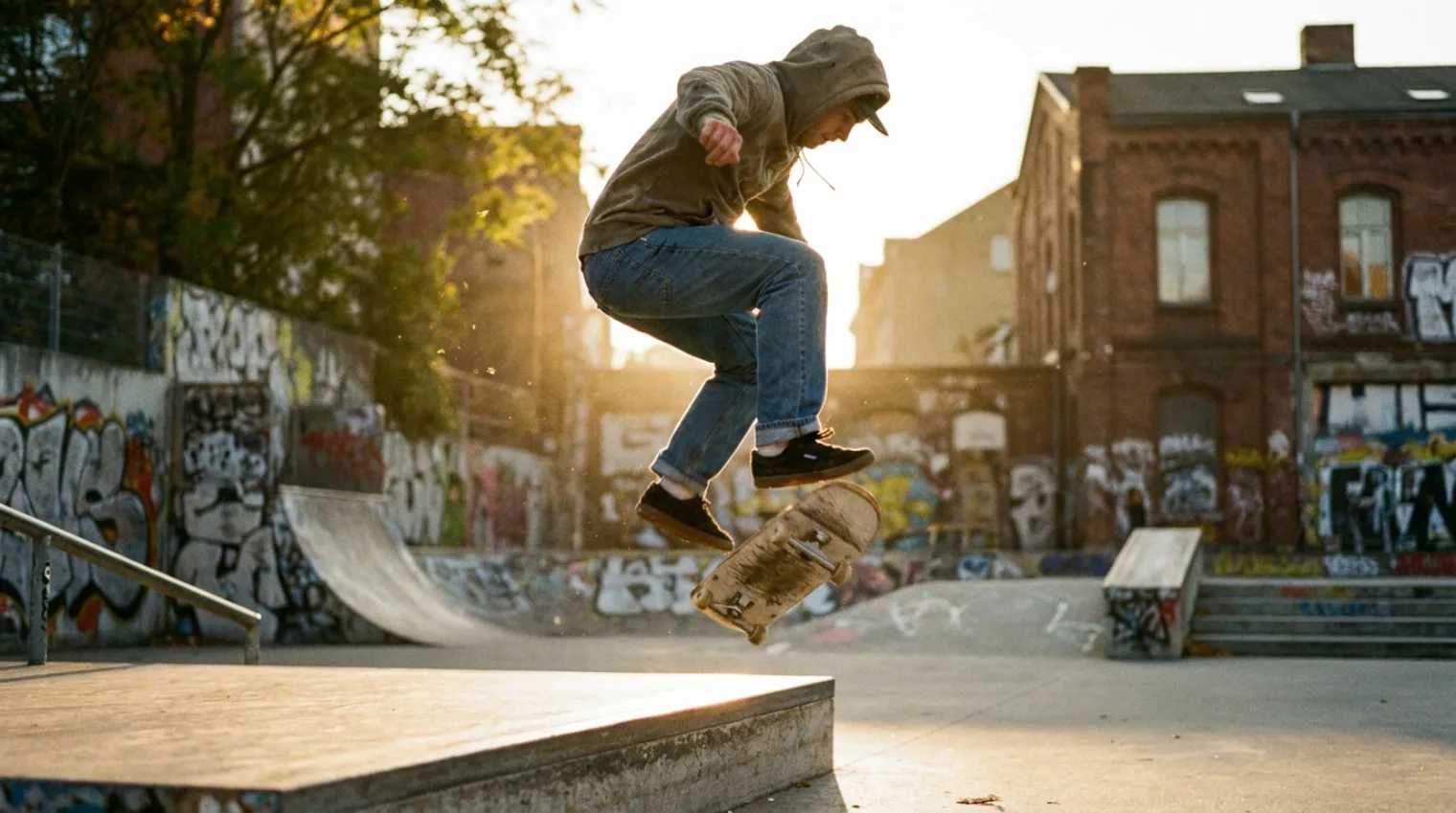
Onbolts' learning data puts tre flip at 6–18 months, advanced difficulty, with pop shove-it and kickflip as its two prerequisites. That's one of the widest windows on the whole skill tree, and the width itself is the honest answer to how long tre flip takes: it depends far more on how solid your prerequisites already are than on raw hours spent trying.
What the estimate is measuring
6–18 months isn't a countdown from the day you start attempting tre flip. It's Onbolts' aggregate read on how long skaters typically take from the point their kickflip and pop shove-it are consistent to the point tre flip itself reaches consistent on the 5-level progress scale: learning, landed once, occasional, consistent, mastered. Skaters who start the clock with a shaky kickflip are really measuring two things at once, finishing kickflip and learning tre flip, which is part of why individual timelines vary so much within that range.
A rough gut check: if you can already land ten kickflips in a row without thinking about it, and the same for pop shove-it, you're closer to the low end of the window than someone who can land each prerequisite but still has to concentrate hard to do it.
Why the range is this wide
A 12-month spread is unusually large compared to something like kickflip's own 1–6 month window. Tre flip asks for a full rotation, not the smaller shove-it used in varial kickflip or the frontside-shove-it-sized rotation in hardflip. That full rotation has to stay synced with a full kickflip-style flip the entire way around, and small timing errors compound over the longer rotation rather than getting masked by a shorter one.
Session frequency matters more here than for most tricks. Skaters practicing several times a week tend to land in the lower half of the range. Skaters with inconsistent, sporadic sessions often need the full 18 months or longer, not because the trick itself is harder for them, but because timing-dependent tricks lose progress between long gaps in a way that raw-strength tricks don't.
Board speed plays a role too. A tre flip attempted from a near standstill has to complete the same 360 degree rotation with the same limited hang time as one attempted with a bit of roll, which leaves less margin for the flip and rotation to resync if either one starts slightly off.
The two prerequisites, and what each one is really teaching you
Pop shove-it teaches your back foot the full rotation. Kickflip teaches your front foot the flip. Tre flip needs both running together through a complete 360 degree turn, which is a longer, less forgiving version of the same pairing that makes up varial kickflip. If your pop shove-it is inconsistent, that inconsistency doesn't disappear inside tre flip, it gets amplified, because there's more rotation for a bad pop to throw off track.
Skaters sometimes ask whether 360 shove-it is a hidden prerequisite, since tre flip's rotation looks similar. Onbolts' tree doesn't list it as one. The prerequisite is the base pop shove-it motion; the fuller rotation is something tre flip itself teaches, not something you need pre-built.
There's also a practical speed component worth naming. A kickflip that takes an unusually long time to complete its own flip, even if it's consistent, gives a full 360 degree rotation less room to catch up within the same hang time. Skaters with a slow, deliberate kickflip style sometimes need to tighten that flip up specifically for tre flip, even though it was never a problem for the kickflip on its own.
Watching your own attempts on video is the fastest way to tell which half is lagging. If the board catches with the flip complete but the rotation short, the back foot's pop needs more commitment. If the rotation looks done but the flip is still resolving as you catch it, the front foot's kickflip scoop needs to fire earlier relative to the pop.
Tre flip across stances
Tre flip has fakie, nollie, and switch versions on the tree too, each locked behind its own matching prerequisites rather than the regular versions: fakie tre flip needs fakie shove-it and fakie kickflip, nollie tre flip needs nollie shove-it and nollie kickflip, and switch tre flip needs switch shove-it and switch kickflip. All three sit at advanced, and none carries a published learning-time estimate yet, so any specific number attached to those variants elsewhere isn't tree data.
What that structure tells you: the tree treats each stance's tre flip as its own full timeline, not a quick add-on once you have the regular version. If switch tre flip is a long-term goal, the honest plan is to treat switch kickflip and switch shove-it as their own 6 to 18 month runway, the same as the regular versions, rather than assuming familiarity with regular tre flip will meaningfully shortcut it.
Breaking the timeline down across the 5-level scale
Roughly, within the 6 to 18 month window:
- Learning to landed once typically eats the largest share, often more than half the total window, because the first clean catch is the hardest single milestone in a full-rotation flip trick.
- Landed once to occasional moves noticeably faster once your body has found the timing once. This is usually where skaters feel the trick click.
- Occasional to consistent is where volume matters most. This stage is closer to repetition and conditioning than to new technique.
- Consistent to mastered is optional territory for most skaters and isn't factored heavily into the estimate at all, since mastered means clean execution in varied conditions, not just landing it at a spot you know well.
These stage boundaries aren't hard lines, and Onbolts' own data reflects a spread rather than a fixed schedule for a reason: a skater with three sessions a week and a fast, consistent kickflip going in can compress the whole window meaningfully, while someone squeezing in one session every couple of weeks can extend it well past 18 months without the trick itself becoming any harder.
What comes after tre flip
Onbolts' tree lists hardflip and laser flip as the direct next tricks once tre flip is consistent. That's a meaningful signal about the trick's role: it's not a capstone, it's a hub that opens up two separate advanced branches, one built on frontside shove-it style rotation, one on heelflip and 360 shove-it. If either of those is your actual end goal, treat tre flip's 6 to 18 month window as the realistic runway before you even start on them, not a detour. Laser flip specifically also lists varial heelflip as a prerequisite alongside heelflip and frontside 360 shove-it, so it's a longer-term target than hardflip even from the same tre flip starting point.
Tracking a trick this long without losing motivation
A multi-month trick is where Onbolts' over-time tracking earns its keep. Because tre flip's timeline runs longer than almost anything else on the tree, it's easy to feel like nothing is happening even when it is, especially in the stretch between learning and landed once where visible wins are rare. Logging every session, not just landed attempts, is what lets the progress charts show a real trend line instead of a flat stretch of nothing. It's also how the regression view catches it early if a skill slips backward after a break, rather than you assuming the trick got harder for no reason.
What moves you toward the low end of the range
The honest levers, based on what the prerequisite structure implies:
- Get kickflip and pop shove-it to consistent, not just landed once, before spending serious reps on tre flip itself.
- Practice more than once a week if you can. Timing-dependent tricks decay between long gaps.
- Film attempts specifically to check whether the flip or the rotation is lagging, since fixing the wrong half wastes sessions.
- Log every attempt on your progress tracker rather than only logging landed tricks. The learning and landed-once stages are where most of the real work happens, even though they're the least visible from the outside.
- Practice at a spot with a bit of run-up room rather than a dead-standstill start. A little rolling speed gives a full 360 degree rotation more time in the air to complete before your feet come back down.
For a look at the shorter-rotation sibling in this family, the hardflip breakdown covers a related but distinct combination, and the varial kickflip guide is a good warmup trick if your pop shove-it or kickflip still needs work before tackling tre flip directly. Browse the full tricks list or tutorial videos for more on where tre flip sits in the bigger picture.
Frequently asked
- Is tre flip the same as a 360 flip?
- Yes, tre flip and 360 flip are two names for the same trick on most trick lists, a kickflip combined with a full 360 degree shove-it style rotation. Onbolts tracks it under the tre-flip slug, rated advanced with a 6–18 month learning window.
- Why is the tre flip time estimate so much wider than kickflip's?
- Kickflip is a single-axis trick with a 1–6 month range. Tre flip adds a full rotation on top of that flip, and small timing errors compound over a longer rotation, which is why its range stretches to 6–18 months instead of a narrower window.
- Do I need 360 shove-it before learning tre flip?
- No. Onbolts' skill tree lists pop shove-it and kickflip as the two prerequisites, not 360 shove-it. The fuller rotation is something you build inside tre flip itself, using the base pop shove-it motion as the starting point.
- What should I work on if I'm stuck at the learning stage for months?
- Check whether your kickflip and pop shove-it are at consistent, not just landed once, since Onbolts' data shows the learning to landed once stage is where most of the tre flip timeline gets spent, and shaky prerequisites are usually why it stretches out.
- What comes after tre flip on the skill tree?
- Onbolts lists hardflip and laser flip as the two direct next tricks once tre flip reaches consistent, so it functions as a hub trick for two separate advanced branches rather than an endpoint.
- Does practicing tre flip more often shorten the timeline?
- Based on how the estimate is built, yes. Because tre flip is timing-dependent rather than purely strength-dependent, consistent frequent sessions tend to land skaters in the lower half of the 6–18 month range, while sporadic practice tends to push toward the higher end or beyond it.