blog-post // Aug 4, 2026
The Hardest Stance Variant Tricks and What Makes Them So Difficult
Switch Kickflip, Nollie Heelflip, and Cab: Onbolts' skill tree data shows which stance variant tricks jump a full difficulty tier, and exactly why they do.
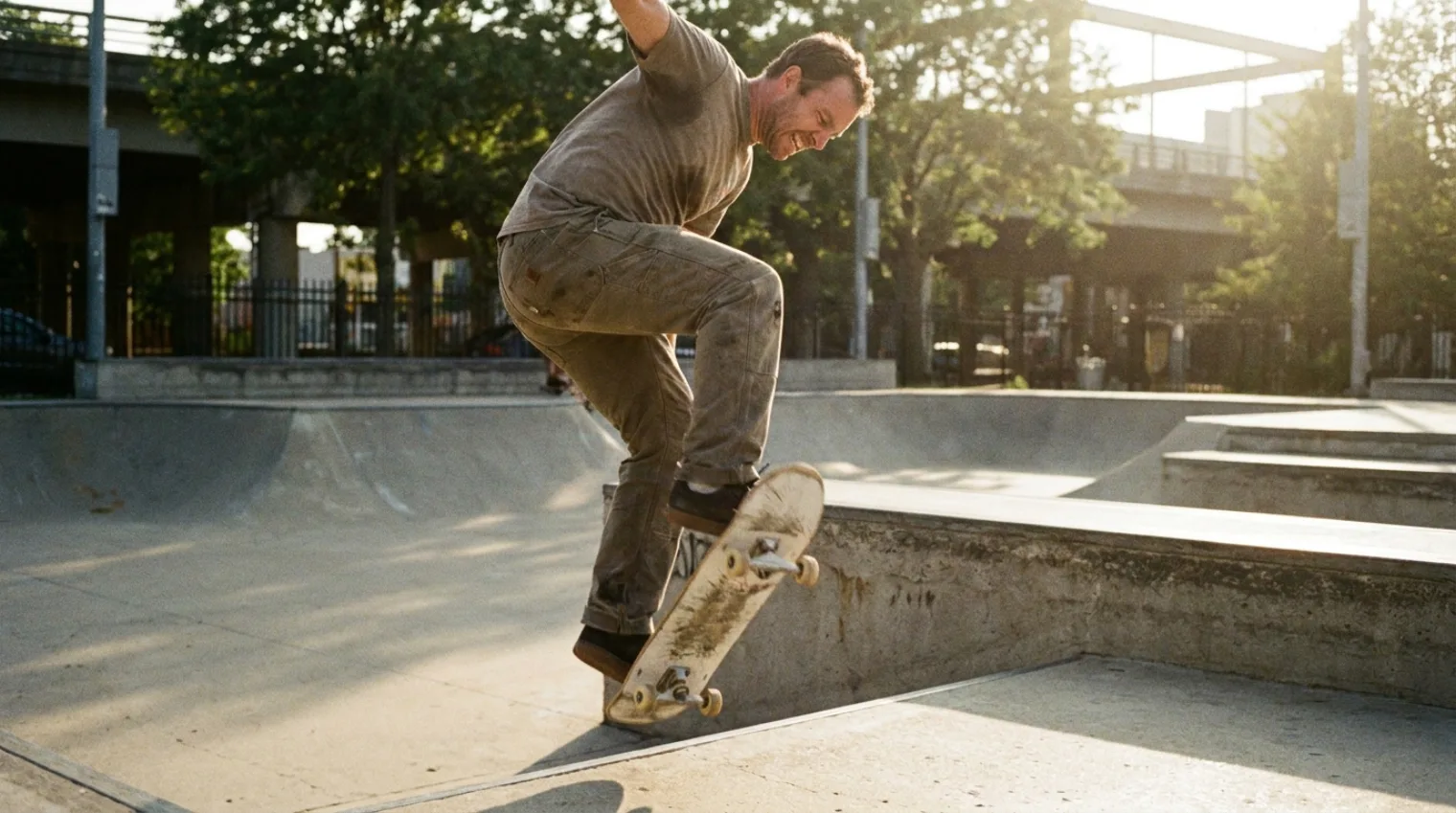
The hardest stance variant tricks on Onbolts are the switch and nollie versions of tricks that are already demanding in your natural stance. Switch Kickflip is rated advanced at an estimated "4-12 months," close to double Kickflip's intermediate "1-6 months." Nollie Heelflip is advanced at "3–8 months" against Heelflip's intermediate "1-4 months." Add Cab, the fakie backside 360 rated advanced at "3-9 months," plus the switch and nollie versions of Tre Flip and Laser Flip, and you've got the tricks that actually separate an intermediate trick bag from an advanced one.
Why the same trick gets harder when you flip the stance
A kickflip is a kickflip: same flick, same catch, same pop mechanics in theory. In practice, flipping the stance removes every bit of muscle memory you've built. Switch takes away your dominant push foot, your dominant steering foot, and your dominant pop foot all at once, so there's no backup instinct to fall back on when something goes wrong mid-trick. Nollie is a smaller change on paper, since you keep your normal foot placement, but it moves the pop to your front foot and shortens the board in front of you, which cuts your reaction window and your leverage. Fakie changes the least, which is exactly why fakie versions of hard tricks tend to trail only modestly behind their regular-stance counterparts, while switch versions can nearly double the learning window.
Not every fakie, nollie, or switch trick makes a "hardest" list, and that's deliberate. Fakie Ollie and most early fakie tricks barely move the difficulty needle, since fakie only changes your direction of travel. The tricks covered below earned their place because they combine two hard things at once: a technically demanding trick, whether that's a full rotation, a stacked flip, or a tight grind, layered on top of an unfamiliar stance. That's why Switch Kickflip, Nollie Heelflip, Cab, and the switch and nollie Tre Flip and Laser Flip lines make the cut while, say, Fakie Backside 180 doesn't.
Switch Kickflip: the benchmark hard switch trick
Kickflip sits at intermediate with an estimated "1–6 months" to learn in your natural stance. Switch Kickflip requires both Kickflip and Switch Ollie as prerequisites, and it jumps all the way to advanced at "4-12 months." That's the cleanest side-by-side comparison in Onbolts' data for how much the stance itself costs, since the flip trick is identical. If you're using Switch Kickflip as your personal benchmark for "have I actually built a switch game," that's a reasonable read of the numbers.
Part of why the gap is so wide is that Switch Kickflip doesn't just need one new skill, it needs two stacked on top of each other: a solid Switch Ollie underneath it, and the flick-and-catch timing of Kickflip rebuilt from the opposite foot. Most skaters who already have Kickflip mastered in their natural stance can flick a switch kickflip inconsistently within weeks. Getting that same flick to hold up at the consistent level, the point where it's actually usable in a line, is where most of that "4–12 months" gets spent.
Nollie Heelflip: the toe-drag problem
Heelflip is intermediate at "1–4 months" from your regular stance. Nollie Heelflip requires both Heelflip and Nollie, and it's rated advanced at "3-8 months." Part of what makes it harder than a straightforward nollie flip is the flick direction: your heel is dragging off a shorter nose with less board underneath it, and there's less room to correct a lazy or late flick before you're already in the air. It's a good example of a trick where the nollie tax is closer to the switch tax than to the fakie tax.
Cab: rotating blind, backward
Cab, which is Onbolts' name for a fakie backside 360, is rated advanced at "3-9 months," with prerequisites of both Frontside 180 and Fakie Ollie. It's worth contrasting with its easier sibling, Half Cab, which is a fakie frontside 180 rated only intermediate with Fakie Ollie as its sole prerequisite. Half Cab asks you to rotate 180 degrees while already rolling backward. Cab asks for a full 360, backward, blind through most of the rotation since you can't spot your landing the way you can on a frontside spin. That combination of fakie plus a full blind rotation is why Cab sits noticeably above most other fakie tricks on the difficulty scale.
This is also a useful reminder that "fakie" isn't automatically the easy stance in every case. Fakie versions of a straightforward flip or shove-it really do cost close to nothing extra. But Cab shows that stacking a big, blind rotation onto fakie can land it firmly in advanced territory anyway, at "3-9 months," which is closer to Kickflip's intermediate ceiling than to the couple of weeks a typical fakie trick adds.
Switch and nollie Tre Flip and Laser Flip: stacking difficulty on unfamiliar footing
Tre Flip in your natural stance is already advanced at "6-18 months." Its stance variants push further into advanced territory without a published time band yet on Onbolts, which fits the pattern: these are rarer landed tricks, so less data has accumulated, not that they're suddenly easy. Switch Tre Flip requires both Switch Shove-it and Switch Kickflip, meaning you need the full switch foundation, including that "4–12 months" Switch Kickflip, before this one even unlocks in the tree. Nollie Tre Flip follows the same shape, requiring Nollie Shove-it and Nollie Kickflip.
Laser Flip sits at advanced with a "6–18 months" band in your natural stance, requiring Heelflip, Frontside 360 Shove-it, and Varial Heelflip all landed first. Onbolts doesn't yet have prerequisite data recorded for Switch Laser Flip or Nollie Laser Flip specifically, but the fakie version gives a useful pattern: Fakie Laser Flip requires both Fakie Heelflip and Fakie Tre Flip. It's reasonable to expect the switch and nollie versions to follow the same shape, stacking a heelflip and a tre flip in that stance before laser flip becomes realistic.
Stance-variant slide and grind tricks that jump a tier
The pattern isn't limited to flip tricks. Boardslide is intermediate at "2–6 weeks" in your regular stance, requiring only Ollie. Switch Boardslide, requiring Switch Ollie, jumps to advanced with no published time band, purely from the stance change on a trick that's otherwise mechanically the same lock-and-slide. Crooked Grind is advanced at "2-5 months," requiring Nosegrind first. Switch Crooked Grind requires Switch Nosegrind and carries no time band yet, the same story: a trick that's already advanced gets harder still once you take away your natural stance under a grinding board. Fakie Bluntslide, requiring Fakie Boardslide and Fakie Noseslide, sits in the same territory, above the regular Bluntslide's already-steep "3-8 months."
What the prerequisite chain tells you about difficulty stacking
Follow Switch Tre Flip back through the tree and you'll see exactly why it's hard: it needs Switch Shove-it and Switch Kickflip, which each need Switch Ollie, which itself carries no shortcuts. Every stance-variant trick you add on top compounds the stance tax instead of resetting it. Pulling up the tree view and tracing these chains visually makes it obvious why a switch version of an advanced trick isn't just "advanced plus a little," it's advanced stacked on top of an entire second stance you've had to build from the ground up.
Put the clearest comparisons next to each other and the pattern is hard to miss. Kickflip's "1–6 months" becomes Switch Kickflip's "4-12 months." Heelflip's "1–4 months" becomes Nollie Heelflip's "3-8 months." Boardslide's "2–6 weeks" becomes an unlisted-but-advanced Switch Boardslide. Crooked Grind's "2–5 months" becomes an unlisted-but-advanced Switch Crooked Grind. In every case, the regular-stance trick is intermediate or beginner, and the stance-variant version jumps straight to advanced, often without even keeping a published time estimate because so few skaters have logged consistent reps on it yet. That gap, not the individual trick names, is the real subject of this article.
Should you attempt these yet
The tree's own prerequisites already answer this for you in most cases. Switch Kickflip won't unlock until you've got both Kickflip and Switch Ollie recorded. Nollie Heelflip won't unlock until Heelflip and Nollie are both in your progress. Rather than guessing, check your progress page and confirm the regular-stance prerequisite sits at consistent or better before spending real practice time on the stance-variant version. Chasing a "4–12 months" trick before its own prerequisites are solid is the most common way to stall out on these, and it's a slower path than simply banking the regular version first.
For a broader plan on which stance variant to tackle first before you get to these harder ones, see our guide on stance-variant order, or go pull up Switch Kickflip directly and check what's already unlocked in your account.
Frequently asked
- Why is switch kickflip so much harder than a regular kickflip?
- The flip mechanics are identical, but switch removes your dominant push foot, steering foot, and pop foot all at once, with no muscle memory to fall back on. Onbolts rates Switch Kickflip advanced at "4-12 months," against Kickflip's intermediate "1-6 months," and it requires both Kickflip and Switch Ollie as prerequisites.
- Is nollie heelflip harder than switch heelflip?
- Nollie Heelflip has a published band on Onbolts, advanced at "3-8 months," requiring Heelflip and Nollie. Switch Heelflip is also rated advanced but doesn't have a published time estimate yet. Both sit well above the regular Heelflip's intermediate "1-4 months," so the honest answer is that both are hard; nollie just has more recorded data behind it.
- What is a Cab in skateboarding?
- Cab is Onbolts' name for a fakie backside 360, a full 360-degree rotation performed while riding fakie. It's rated advanced at "3-9 months," requiring both Frontside 180 and Fakie Ollie as prerequisites, and it's considerably harder than its close relative Half Cab, which is only a fakie frontside 180.
- Do I need switch tre flip before switch laser flip?
- Onbolts doesn't have prerequisite data recorded specifically for Switch Laser Flip yet, but the fakie version shows the likely pattern: Fakie Laser Flip requires both Fakie Heelflip and Fakie Tre Flip. Expect the switch version to require a similar foundation, meaning Switch Tre Flip and a solid Switch Heelflip first.
- Which is generally harder, nollie or switch?
- It depends on the trick family, but switch tends to run higher on average because it changes your entire stance rather than just your pop foot. Switch Kickflip's "4-12 months" against Nollie Kickflip's unlisted-but-intermediate rating illustrates this, though tricks like Nollie Heelflip show nollie can carry its own steep, advanced-tier cost too.
- Should beginners attempt these tricks?
- No. Every trick covered here sits behind its own prerequisite chain on Onbolts, and those chains exist for a reason. Switch Kickflip won't unlock until Kickflip and Switch Ollie are both logged, and Nollie Heelflip won't unlock until Heelflip and Nollie are both logged, so check your progress page before spending practice time here.