blog-post // Aug 12, 2026
Which Stance Variants to Learn First: Fakie, Nollie, or Switch
Fakie, nollie, or switch: which comes first? Onbolts' skill tree and learning-time data show the real order, and why switch tricks take the longest to land.
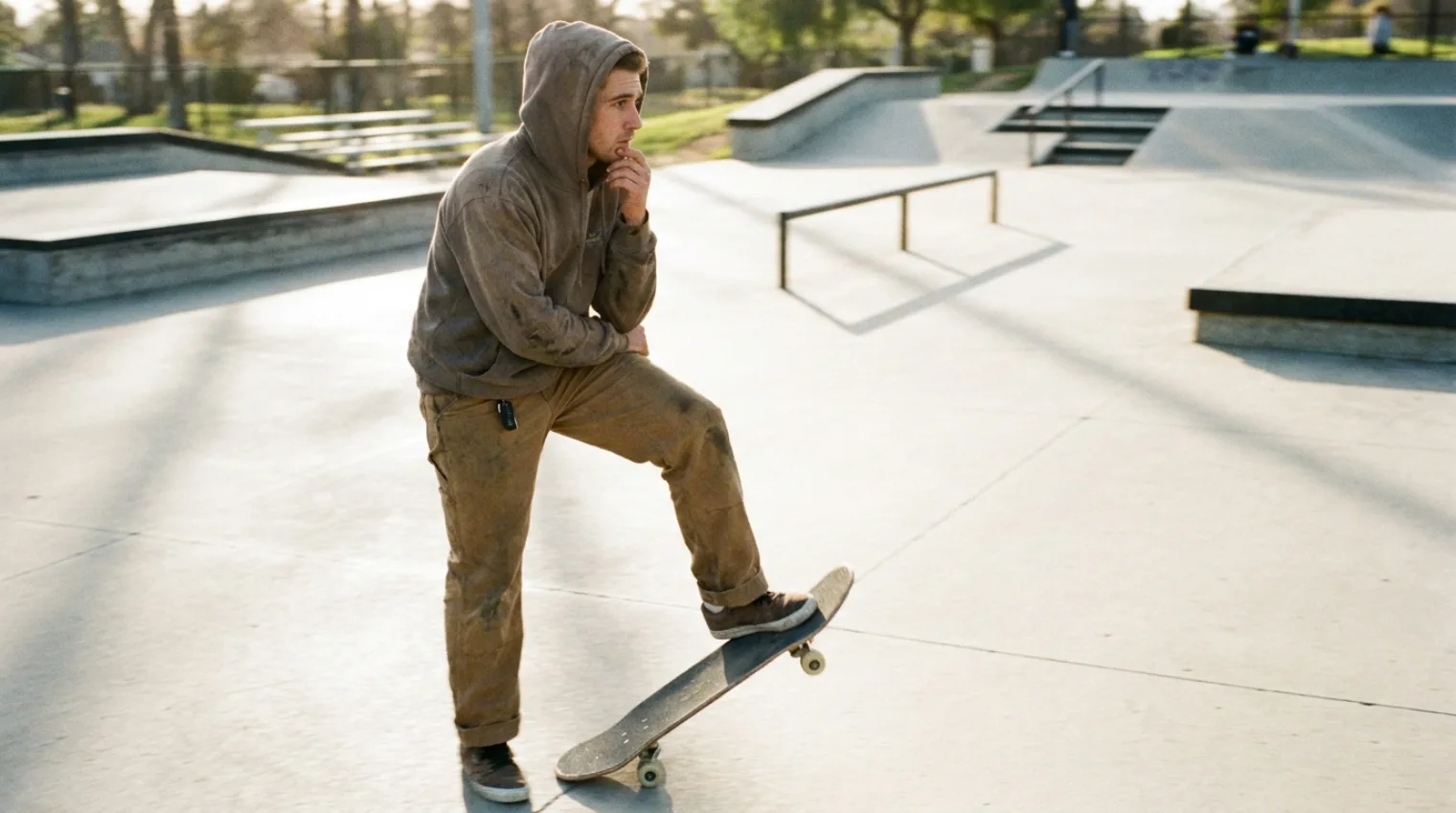
Learn fakie first, then nollie, then switch. Fakie just means rolling backward in your normal stance, so it costs you the least. Nollie hands the pop to your front foot while you're still facing forward, which is a bigger jump. Switch asks you to ride, push, and pop as if your natural stance were mirrored, and that is why switch tricks consistently carry the longest learning-time bands in Onbolts' skill tree data. Switch Kickflip is rated advanced at "4-12 months," roughly double Kickflip's intermediate "1-6 months," even though the flip itself doesn't change.
Regular, goofy, fakie, nollie, and switch: what these words actually mean
It's worth being precise here because people mix these up constantly. Regular and goofy describe your natural stance, meaning which foot you put forward without thinking about it. That never changes trick to trick. Fakie, nollie, and switch are not stances. They are trick variants layered on top of your natural stance:
- Fakie means you're rolling backward, but your feet are still in their normal positions.
- Nollie means you're rolling forward normally, but you pop off the nose with your front foot instead of the tail.
- Switch means you ride, push, and pop with your feet in the mirror-image position of your natural stance, as if you'd swapped regular for goofy.
On Onbolts, each of these gets its own row in the skill tree, with its own slug, its own difficulty rating, and its own prerequisites. Fakie Ollie, Nollie, and Switch Ollie are three separate tricks, not three names for the same thing, and your progress on each is rated independently on the 5-level scale from learning through mastered.
Why fakie comes first
Fakie Ollie is rated beginner with an estimated "1–3 weeks" to learn, barely different from a regular Ollie's "1-4 weeks." In the tree, Fakie Ollie's only prerequisite is Ollie itself. Nothing about your foot placement changes. You're using the exact same pop, the exact same board feel, just rolling the other direction. Most skaters pick this up almost by accident while practicing regular Ollies, which is exactly why it belongs first in any stance-variant plan.
Why nollie is the harder second step
Nollie is rated intermediate at "1-3 months," a real jump from Fakie Ollie's few weeks. The prerequisite is still just Ollie, but the mechanics change more than the difficulty label suggests. Your front foot now does the popping and the board is shorter in front of you, which means less leverage and less time to react before the flip or landing. Most skaters find their nollie pop feels weak and inconsistent for weeks before it clicks, even with a solid regular ollie already at consistent.
Why switch is the biggest jump of the three
Switch Ollie is rated intermediate on Onbolts, but it doesn't carry a published learning-time band yet, which itself says something: switch tricks are less standardized in how long they take, because the real cost shows up downstream. Look at what happens once you add a flip. Switch Kickflip requires both Kickflip and Switch Ollie as prerequisites, and it's rated advanced at "4-12 months." Compare that to Kickflip's own intermediate "1-6 months," learned from your natural stance. Nollie Kickflip, by contrast, only requires Nollie as a prerequisite and stays intermediate. Switch is the one that reliably pushes a trick up a full difficulty tier, because you're not just changing your pop, you're changing which foot does everything: pushing, steering, and reacting.
A grounded progression path through the tree
Onbolts' "next" suggestions map this out cleanly. After Ollie, the tree points to Pop Shove-it, Frontside 180, and Kickflip. After Fakie Ollie, it points to Fakie Shove-it, Half Cab, and Fakie Kickflip. After Nollie, it points to Nollie Shove-it, Nollie Frontside 180, and Nollie Kickflip. After Switch Ollie, it points to Switch Shove-it, Switch Frontside 180, and Switch Kickflip. The pattern repeats identically for every stance, which makes the order easy to follow: get comfortable rolling and popping in a stance, then rebuild the same small set of flatground tricks inside it.
Once you're past each stance's version of Kickflip, the tree suggests Heelflip and Tre Flip next, again in every stance. Fakie Kickflip is intermediate at "1-3 months." Nollie Kickflip has no published time band yet, which usually means less data has accumulated on it, not that it's easy. Switch Kickflip, again, is advanced at "4-12 months." Same trick name, same tree position, three very different costs depending on which stance you're doing it in.
How the tree gates each stance differently
The prerequisite structure has a real asymmetry worth knowing before you plan your practice time. Fakie Kickflip needs both Fakie Ollie and Kickflip, meaning your regular kickflip has to already exist before the fakie version unlocks. Switch Kickflip needs both Kickflip and Switch Ollie, the same double requirement. But Nollie Kickflip only requires Nollie. You don't need a regular Kickflip in your bag at all to start on the nollie version, at least according to the tree's logic. That doesn't mean it's easier to land, just that Onbolts doesn't gate it behind your regular flip trick the way it gates fakie and switch.
Rating each stance on its own 5-level scale
This is where your progress page does real work. Every trick row, including every stance variant, moves through the same five levels: learning, landed once, occasional, consistent, and mastered. Your regular Kickflip can sit at mastered while your Switch Kickflip sits at learning, and that's not a contradiction, it's just two different rows on the tree with two different histories. Rating them separately is what lets you see, honestly, which stance is actually holding you back instead of assuming "I can kickflip" covers all four versions.
Don't skip stances, but don't rush them either
The order that shows up again and again in the data is fakie, then nollie, then switch, and it lines up with what the prerequisite chains actually require. A reasonable approach: get your regular version to consistent, then knock out the fakie version since it barely adds difficulty, then work nollie as its own project, then treat switch as the long-term goal it actually is according to the "4–12 months" band on Switch Kickflip. Trying to run all three stance variants in parallel from day one usually means none of them get enough reps to move past learning, and treating "I can kickflip" as automatic coverage for every stance is the single most common way that plan goes wrong.
It's easy to assume that once your regular Kickflip is mastered, the fakie, nollie, and switch versions are just a matter of a few sessions. The data doesn't support that. Fakie Kickflip really is close, at "1-3 months," which is a fair discount from Kickflip's "1-6 months." But Switch Kickflip is not a discount at all; it's "4-12 months," a longer window than the regular trick you already have. If your plan assumes every stance variant is roughly the same distance away, you'll end up frustrated when switch doesn't move at the pace fakie did. Rate them separately from day one so the gap shows up in your own data instead of as a surprise months in.
Picture a real practice session rather than just the trick names in isolation. Say you can already ride fakie comfortably and you're working on Nollie. A productive session splits time between reinforcing Nollie itself, since it's still intermediate at "1–3 months" and easy to lose the pop feel on if you skip it for a week, and starting to introduce Switch Ollie in short bursts, since it clearly needs an early start given what it feeds into later. What you don't want is a session where you spend equal time on Fakie Kickflip, which is nearly done, and Switch Kickflip, which hasn't even unlocked yet because Switch Ollie isn't solid. The tree's prerequisites are a good forcing function here: if a trick hasn't unlocked, that's your signal to go work on what feeds it instead. Once you're juggling more than one stance at a time, it also helps to weight your practice time by what the tree predicts rather than splitting it evenly; leaning harder into whichever stance sits closest to its next level, tracked through landed once, occasional, and consistent, tends to produce faster visible progress than spreading reps evenly across all three variants at once.
If you want a deeper look at exactly which stance-variant tricks carry the steepest jumps in difficulty, our companion breakdown of the hardest stance variant tricks walks through the specific numbers, including why Switch Kickflip and Nollie Heelflip both jump a full difficulty tier. Otherwise, head to the full trick list and start stacking your fakie ollie reps today; it's the cheapest stance-variant win on the tree.
Frequently asked
- Is switch harder to learn than nollie?
- Generally yes, at least by the time a flip trick is added. On Onbolts, Nollie Kickflip is intermediate with no published time band yet, while Switch Kickflip is rated advanced at "4-12 months," close to double the regular Kickflip's "1-6 months." Nollie changes which foot pops the board; switch changes your entire riding position, which tends to cost more time.
- Do I need to be goofy or regular to learn switch?
- No. Switch just means riding with your feet in the mirror position of whatever your natural stance already is, so a regular skater's switch stance looks like a goofy skater's natural stance, and vice versa. Either way, Switch Ollie and its downstream tricks like Switch Kickflip carry the same relative jump in difficulty.
- Should I master fakie tricks before starting nollie?
- It helps but isn't required by the tree's prerequisites; both Fakie Ollie and Nollie only require a regular Ollie. Practically, fakie tricks cost so little extra time, since Fakie Ollie is beginner at "1-3 weeks" against Ollie's "1-4 weeks," that clearing them first is close to free before you commit real practice time to nollie.
- How long does switch ollie take before switch flip tricks feel real?
- Onbolts doesn't have a published learning-time band for Switch Ollie itself yet. The clearest signal is downstream: Switch Kickflip, which requires both Kickflip and Switch Ollie, is rated advanced at "4-12 months" total, so expect the switch stance itself to take real, sustained time before a switch flip trick starts landing consistently.
- Does landing a nollie trick help my switch version of the same trick?
- Only partially. Nollie keeps your normal foot placement and forward-facing stance, just moving the pop to your front foot, while switch mirrors your entire stance. The pop timing you build in nollie can transfer a little, but switch still requires rebuilding your pushing, steering, and balance from the opposite foot.
- What should I learn right after switch ollie?
- Onbolts' tree lists Switch Shove-it, Switch Frontside 180, and Switch Kickflip as the next suggested tricks after Switch Ollie, the same pattern used after regular Ollie, Fakie Ollie, and Nollie. Working through that same trio in each stance keeps your progression consistent instead of guessing at what comes next.